Leutzsch: A District in Transition
Motivation
Two things led me to examine the Leipzig district of Leutzsch on a quantitative level:
- I have lived in a very central part of Leutzsch for more than two years. During that time I received numerous reactions to my address, mostly negative (primarily regarding xenophobia). I also had some negative personal experiences (a break-in and general confrontations with locals).
- Leipzig’s Statistical Office maintains a rich, high-quality public data set covering all 63 city districts. I had wanted to dig into this source for a while.
My starting question was: can official data reveal a trajectory for Leutzsch?
The conclusion:
Leutzsch is, by the numbers, one of Leipzig’s most average districts — it only stands out for the amount of forest it contains (only three districts have more). But even within that averageness a positive shift is visible: Leutzsch is getting larger, younger, and more employed.
The following seven charts attempt to illustrate this transformation.
Visualisations
Population
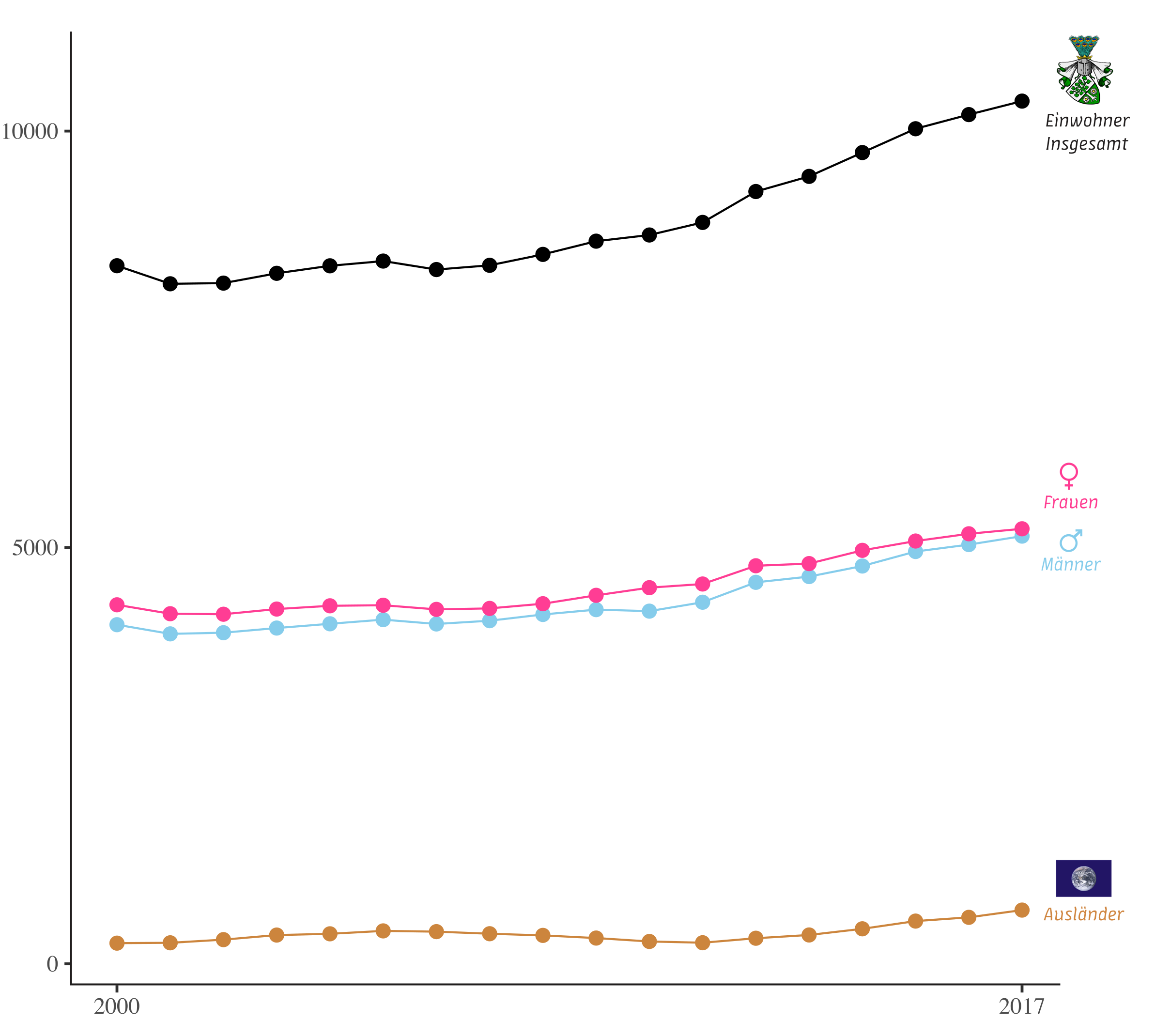
From 2000 to 2017 Leutzsch grew by 1,977 residents. The gender ratio has remained nearly balanced throughout. The number of foreign residents more than doubled (248 to 645). The charts below show causes and consequences of this growth.
Migration
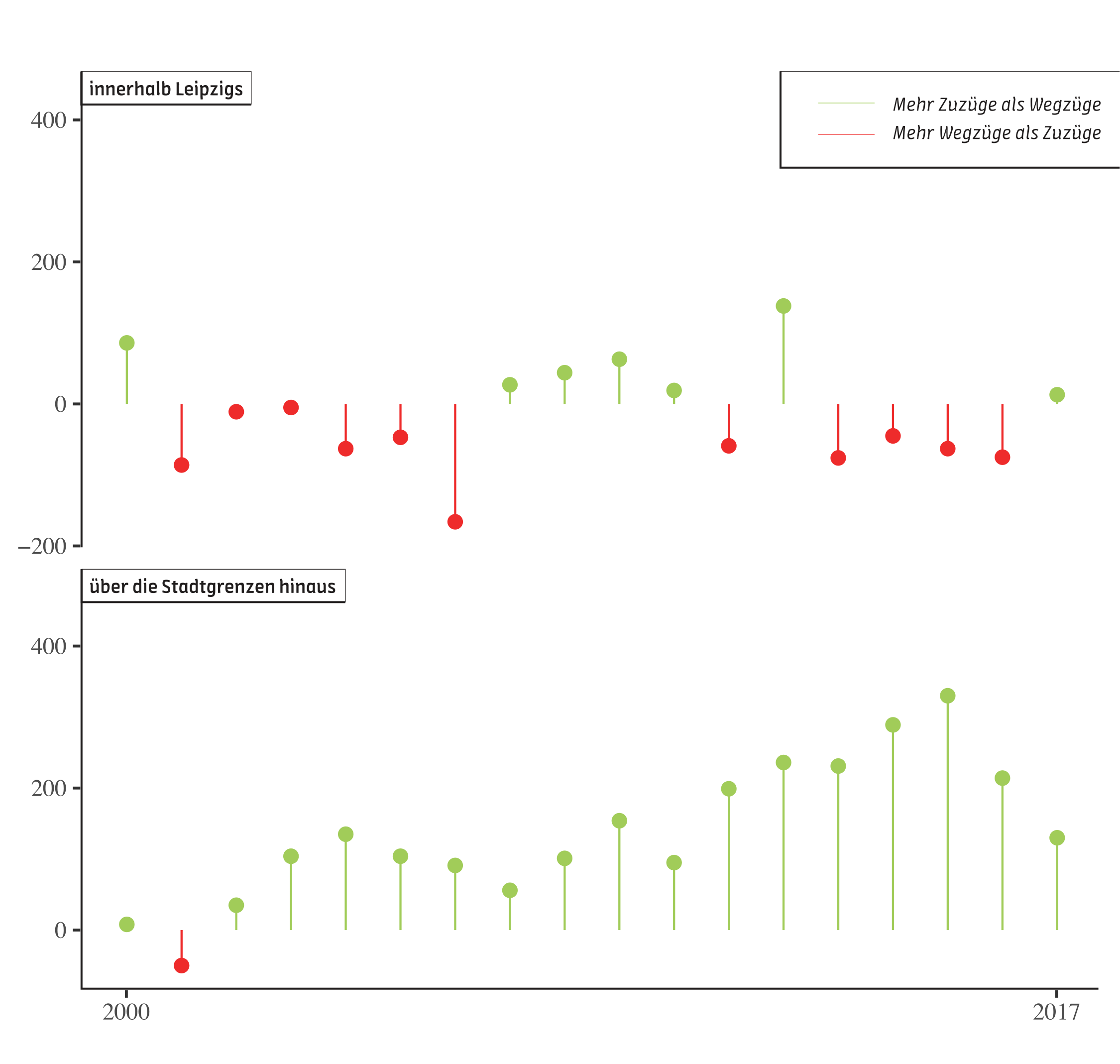
Leutzsch is not a popular destination for moves within Leipzig — that was true 17 years ago and still is today. The population increase is driven mainly by newcomers from outside the city.
Births and Deaths
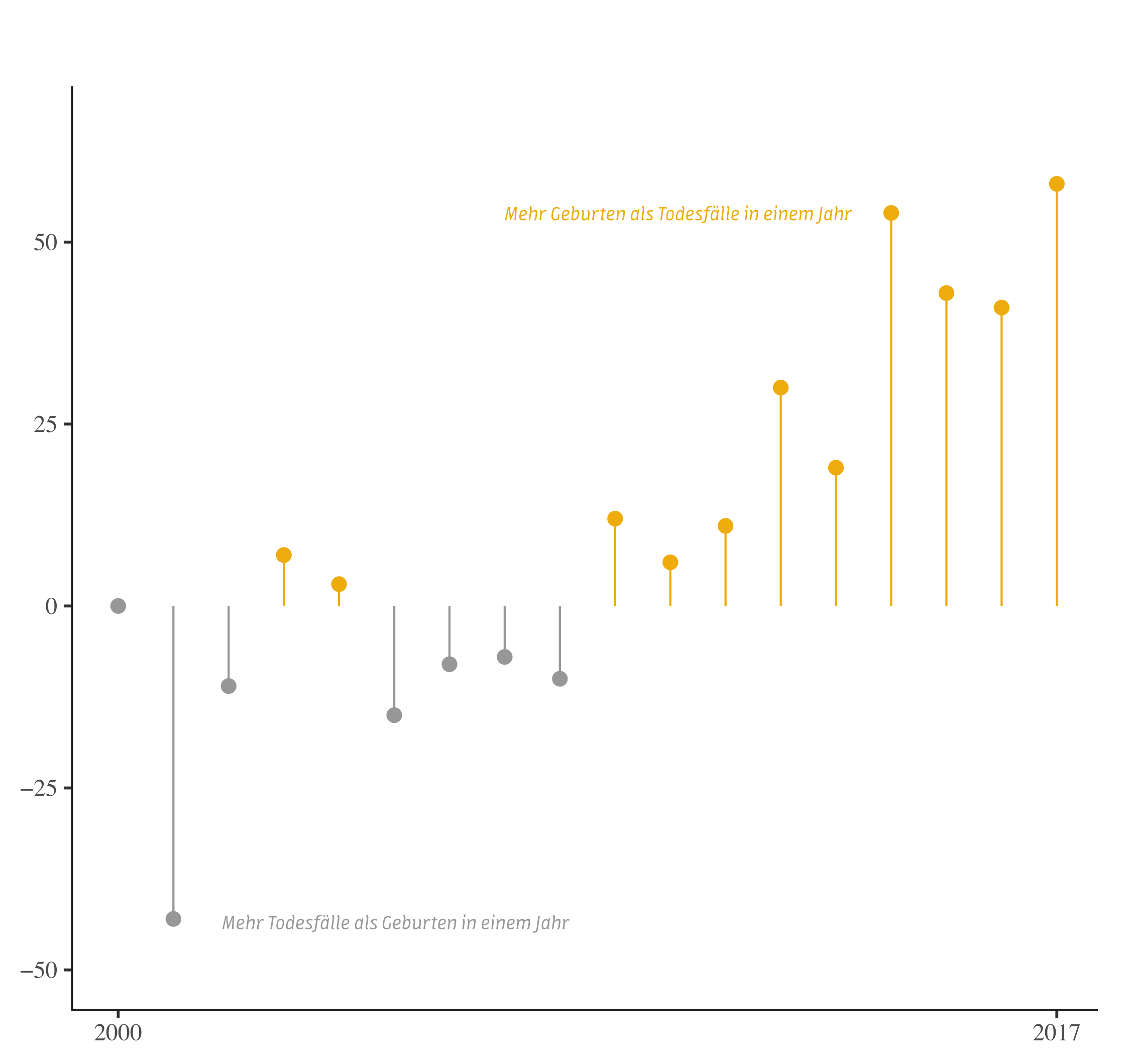
Here we see a clear turning point: only from 2010 onwards do births consistently outnumber deaths in Leutzsch each year.
Age Structure
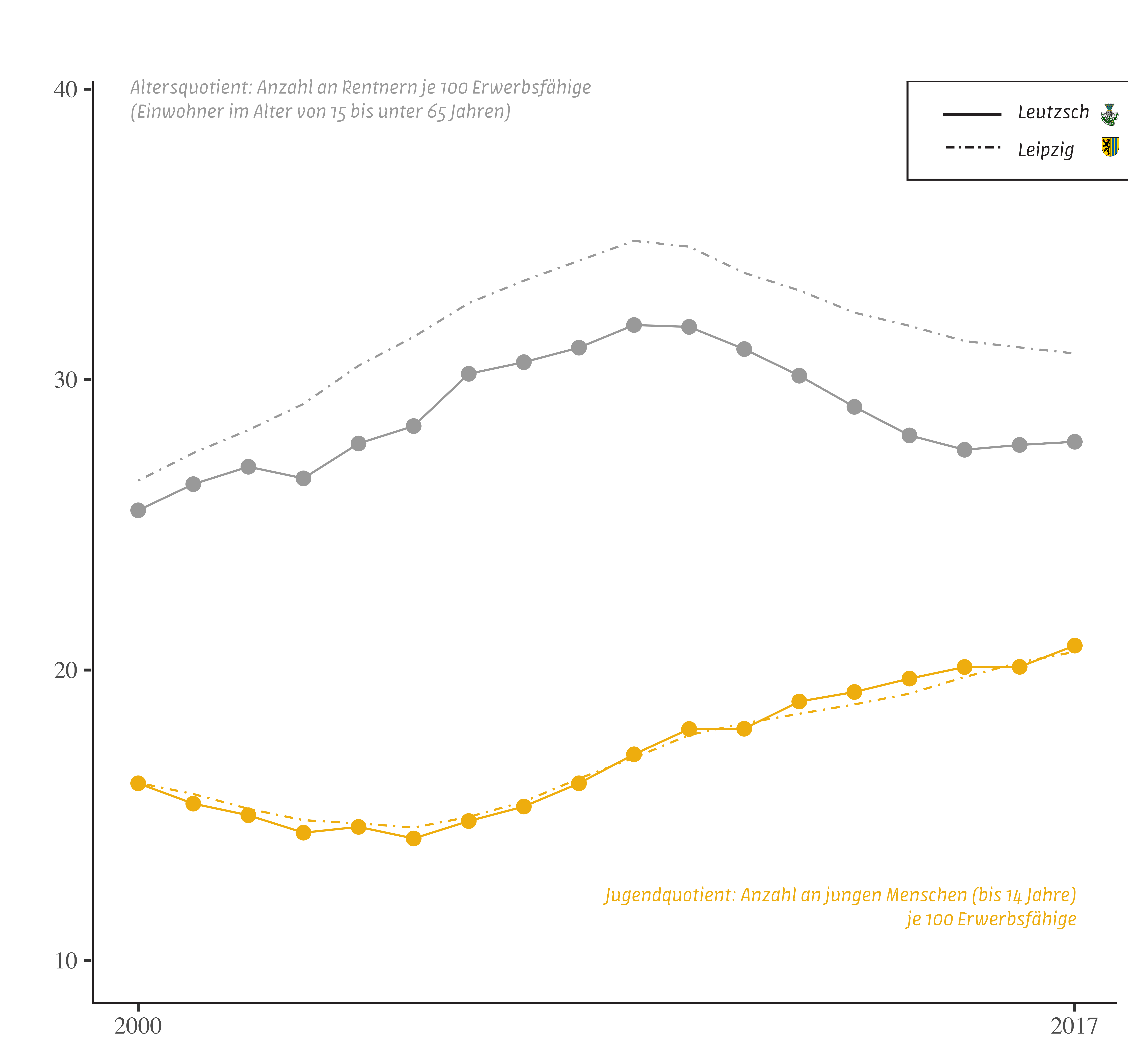
The old-age and youth dependency ratios are useful demographic indicators. Together they capture the share of dependent (very young and very old) residents. While there was a temporary increase in retirees, that trend reversed. Compared to Leipzig as a whole, Leutzsch consistently has fewer pensioners.
The youth ratio rises sharply from the late 2000s — a consequence of the in-migration and rising births shown above.
Unemployment
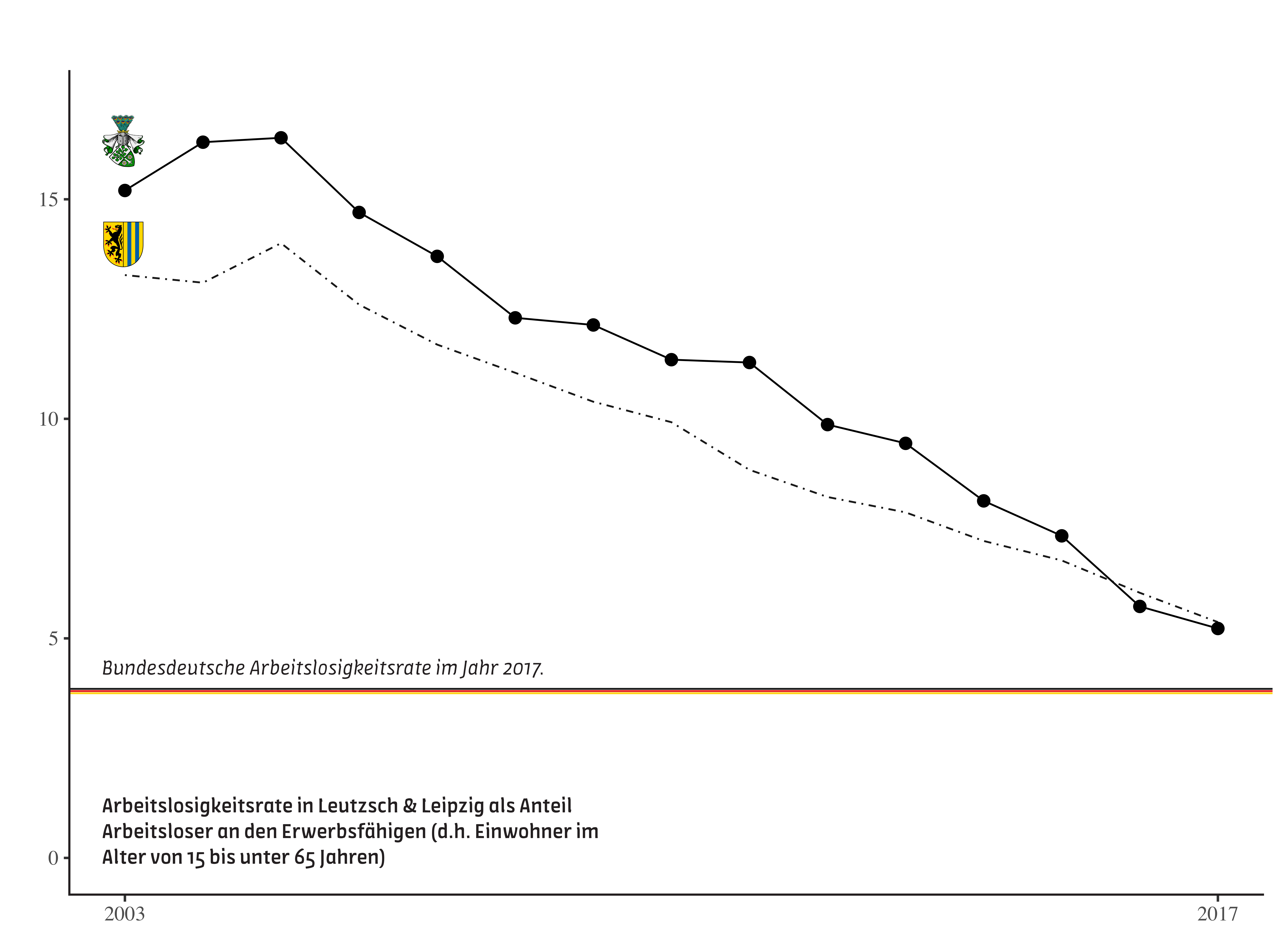
A dramatic drop in the unemployment rate since 2003 — in both Leipzig and Leutzsch. Only two percentage points separate Leutzsch from the national average.
Crime
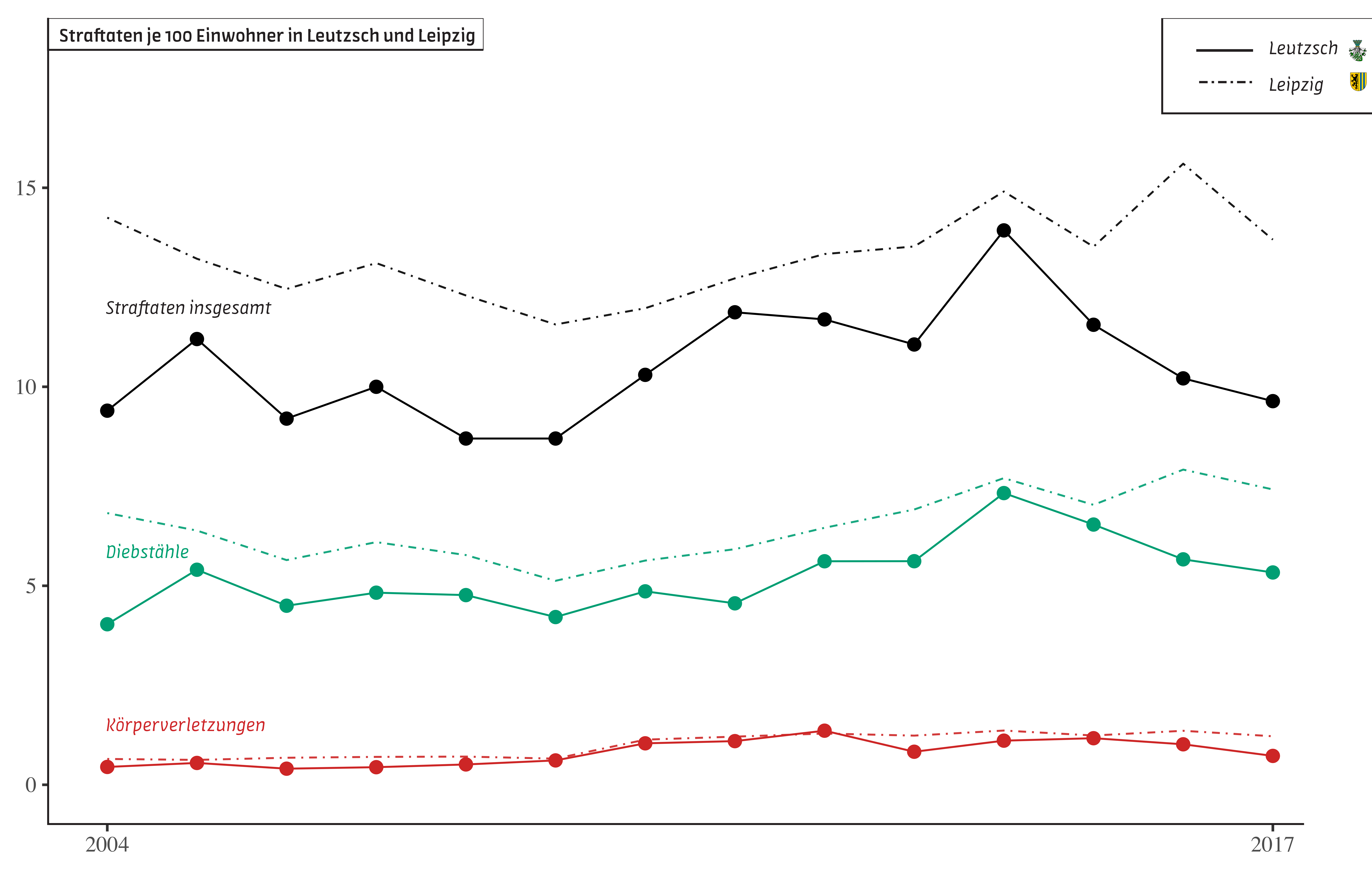
Surprisingly, Leutzsch is below the Leipzig average in all categories of crime. The only notable feature is a sharp spike in thefts in 2014 — mirrored across all of Leipzig.
State Election Results
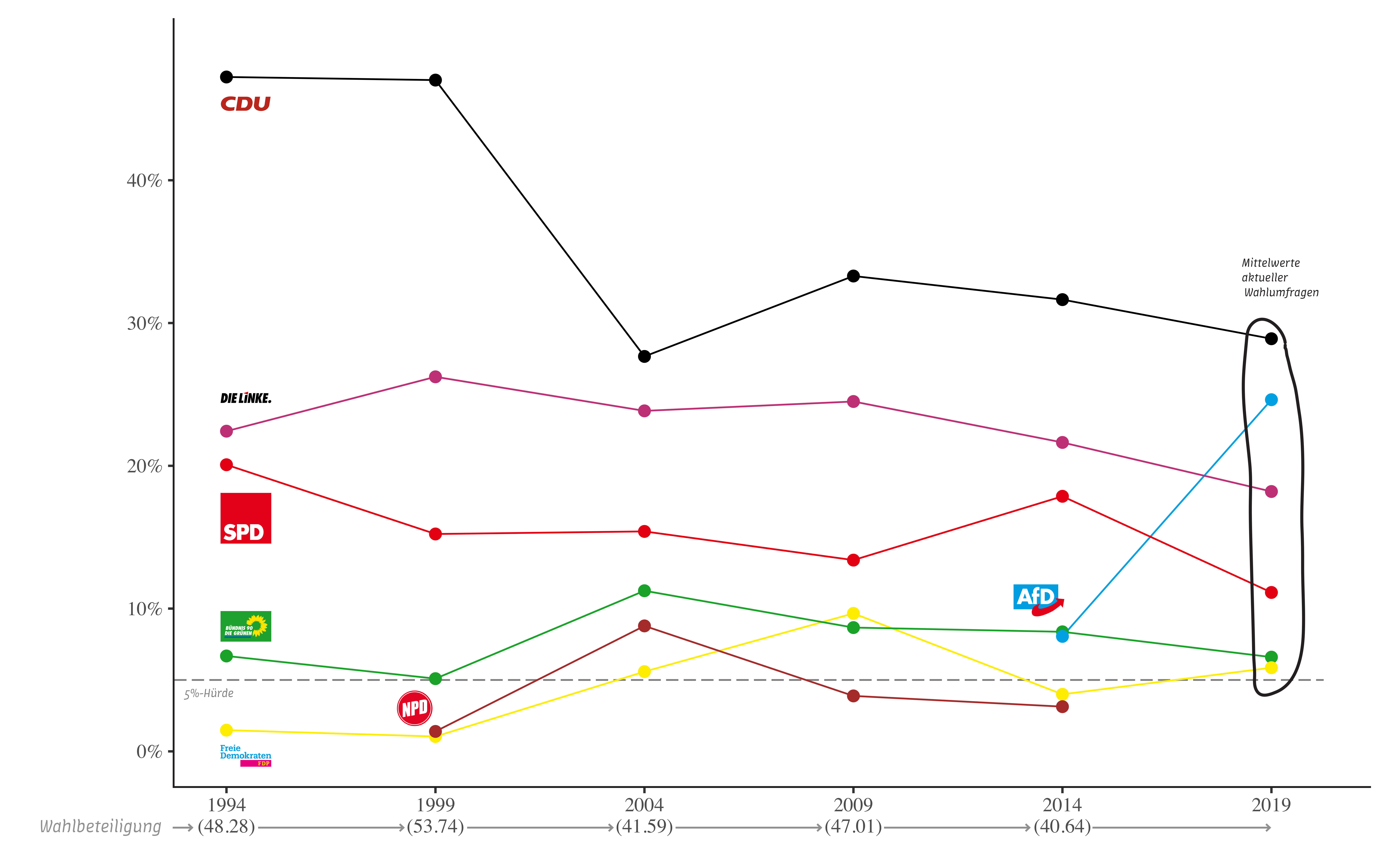
The 2004 state election is particularly striking:
- The CDU lost 20% of its vote share
- The NPD sextupled its share from 1999 and cleared the 5% threshold
- The FDP quintupled its share and also entered parliament
- The Greens doubled their share from 1999
- Turnout dropped 12% compared to 1999
This pattern was reflected across all of Saxony — the NPD entered the Saxon parliament for the first time with 9.2% (source). Even the projected 2019 rise of the AfD (and the Greens) seems less dramatic by comparison.