The Great Croissant Comparison
A good croissant is buttery, flaky, crispy on the outside and melt-in-your-mouth tender on the inside. In Leipzig you’ll find everything — from perfect artisan bakeries to rancid industrial product. We blind-tested 14 bakeries and rated each on a scale of 0 to 5.
Taste vs. Appearance
Does it look expensive but taste like lamp grease? Or the other way around? Green dots are winners, red are losers. Hover for details.
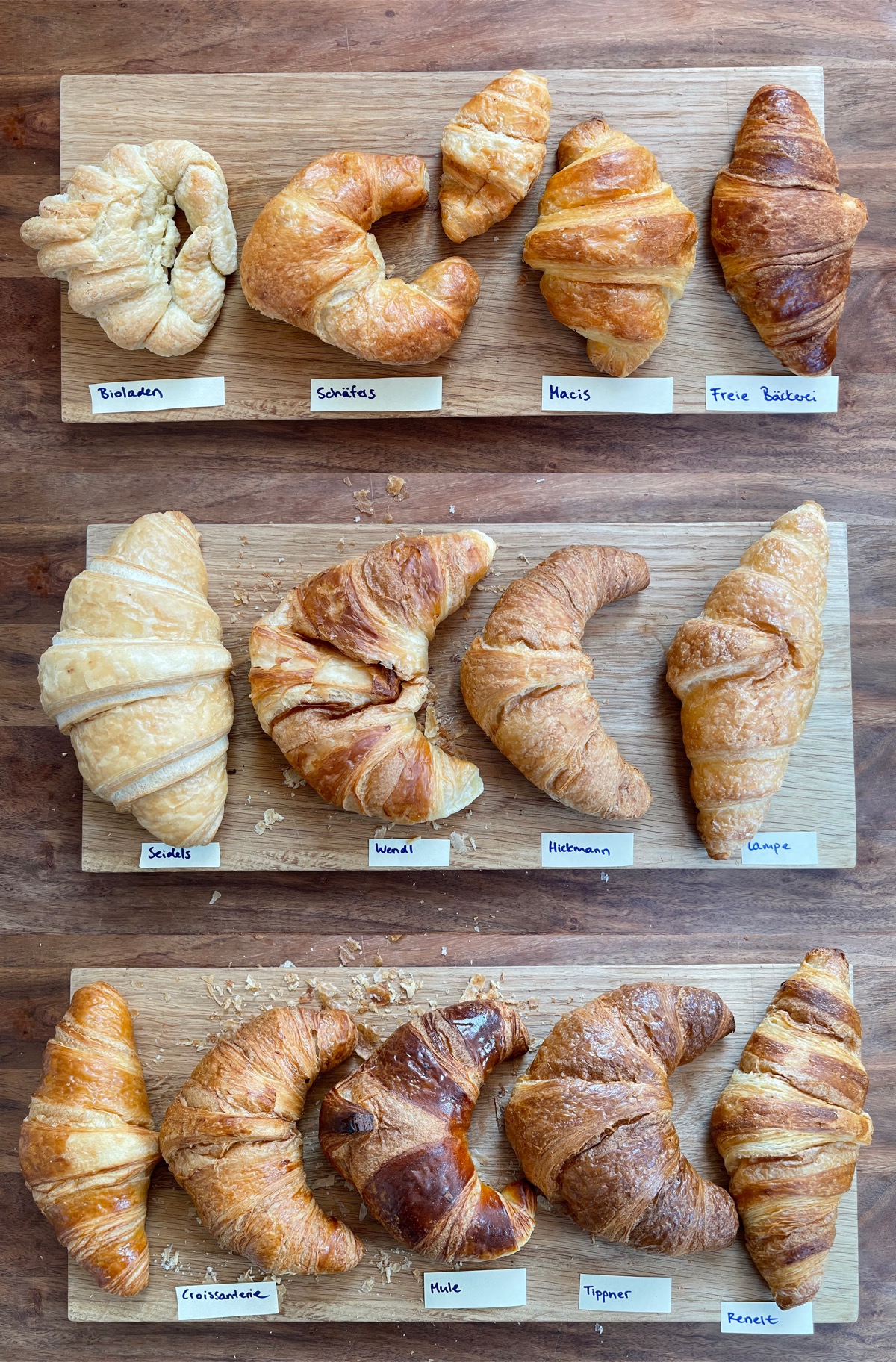
Backstein dominates in both categories. The interesting case: Wendl looks fantastic (4.33) but tastes only mediocre — the classic bait-and-switch. Mule has the same problem. On the flip side, Hickmann manages to deliver a solid 3.50 in taste with an appearance score of just 2.17. Sometimes looks deceive.
The Ranking
Sorted by taste score, top to bottom:
The range is enormous: from 5.00 (Backstein — perfection) to 0.33 (Lampe — “tastes like lamp grease”). Between the extremes lies a broad middle field where industrial bakeries and artisan shops are barely distinguishable.
What the Tasters Said
The most frequent words from the tasting notes. Green = positive, red = negative. The words are in German — they’re the original tasting notes.
“Ranzig” (rancid) and “fettig” (greasy) dominate the loser comments. The winners: “buttrig” (buttery), “knusprig” (crispy), “blättrig” (flaky). The middle field smells of “Aroma” — code for industrial baking mix.
The Map
Where are the 14 bakeries? Larger circles = better taste score. Click for details.
Heavy focus on Leipzig’s west side. If you know good bakeries in the east, let us know.
Methodology
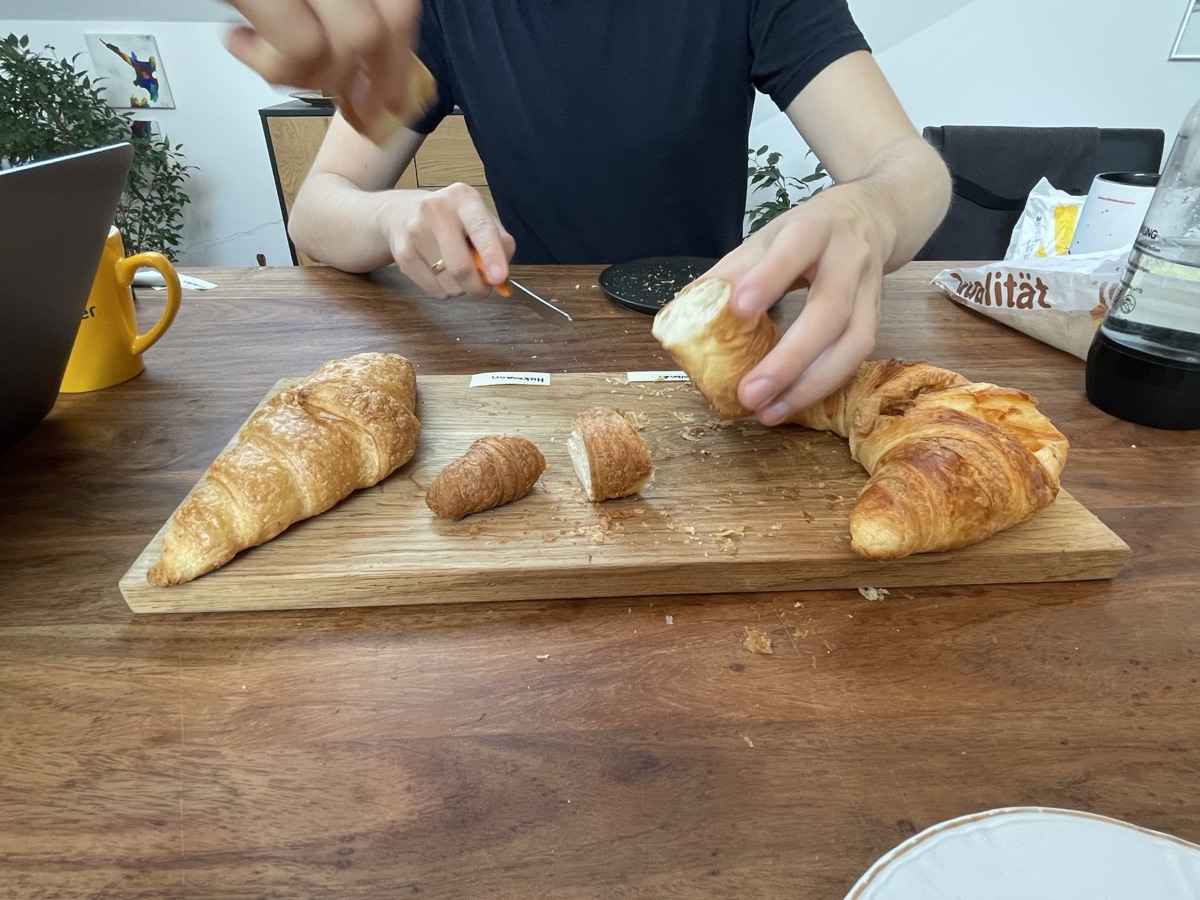
Blind tasting with three judges. Each croissant was rated on taste (0–5) and appearance (0–5). Taste was evaluated across four dimensions: butter flavor, outer crispiness, inner tenderness, and flakiness. The final score is the average of the taste ratings.